Distributed by Design: How Enterprise Edge Computing Is Reshaping Real-Time Operations
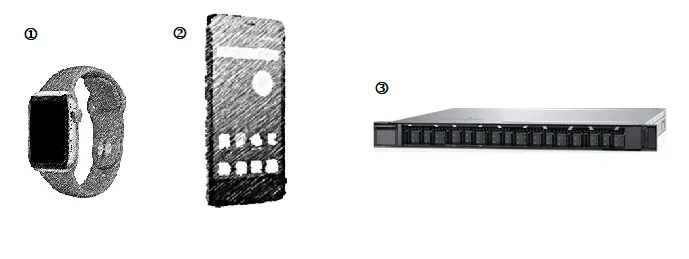
Photo: JJ.FLEURY, CC BY-SA 4.0, via Wikimedia Commons
From the Data Center to the Factory Floor
For years, the dominant model of enterprise computing followed a predictable flow: data generated at the operational edge traveled to a centralized data center or cloud environment for processing, analysis, and decision-making. The model worked well enough when data volumes were manageable and latency was tolerable. Neither condition reliably holds today.
The modern enterprise generates data at a scale and velocity that fundamentally strains centralized architectures. A single automated manufacturing line can produce terabytes of sensor data per shift. A connected hospital system may process thousands of patient monitoring signals per minute. A regional logistics network might coordinate hundreds of vehicles, warehouses, and delivery endpoints simultaneously. Routing all of that data to the cloud for processing and waiting for instructions to return introduces delays that are not merely inconvenient — in many contexts, they are operationally unacceptable.
Edge computing addresses this challenge by relocating processing power to the point of data generation. Rather than sending raw data to a distant server for analysis, edge architectures perform computation locally — on devices, gateways, or small-footprint servers positioned at or near the operational source. The result is dramatically lower latency, reduced bandwidth consumption, and the ability to make real-time decisions without dependence on network connectivity.
Where Edge Computing Is Delivering Measurable Enterprise Value
Manufacturing and Industrial Automation
American manufacturers have emerged as some of the most aggressive adopters of enterprise edge architecture, driven by the demands of smart factory initiatives and industrial IoT deployment. Tesla's Gigafactories represent a widely cited benchmark. The company's production facilities rely on distributed edge computing to process machine vision data, monitor equipment health in real time, and coordinate robotic assembly operations without introducing the latency that cloud-dependent processing would create.
The practical impact extends beyond speed. By processing quality inspection data at the edge, manufacturers can identify defects and trigger corrective actions within milliseconds rather than seconds — a difference that translates directly into reduced waste, lower rework costs, and higher throughput. Predictive maintenance applications similarly benefit from edge proximity: anomaly detection algorithms running locally on equipment can flag potential failures before they cause downtime, without requiring a continuous high-bandwidth connection to a central analytics platform.
Healthcare and Clinical Systems
Healthcare organizations face a particular combination of requirements that make edge computing especially well-suited to their operational environment. Patient monitoring systems must deliver real-time alerts without depending on external connectivity. Medical imaging workflows generate enormous data volumes that are expensive and slow to transmit to centralized systems. And regulatory requirements under HIPAA create strong incentives to minimize the movement of sensitive patient data across networks.
Large hospital systems, including several major academic medical centers, have deployed edge computing infrastructure to support bedside monitoring, surgical robotics, and diagnostic imaging at the point of care. Processing imaging data locally — rather than routing it to a cloud-based analysis service — reduces the time between scan completion and result availability, a meaningful improvement in time-sensitive clinical settings. Edge architectures also provide resilience: locally processed clinical systems continue functioning during network outages, an important consideration for patient safety.
Logistics and Supply Chain
For logistics operators managing complex, geographically distributed networks, edge computing enables a level of real-time visibility and dynamic decision-making that centralized architectures cannot match. Route optimization algorithms running at regional distribution hubs can adapt to live traffic, weather, and inventory conditions without round-trip latency to a central cloud. Warehouse automation systems process sensor and computer vision data locally to coordinate picking robots, manage inventory flows, and flag discrepancies in real time.
Major carriers and third-party logistics providers operating within the US market have invested significantly in edge infrastructure as a competitive differentiator, particularly as same-day and next-day delivery expectations continue to compress operational timelines.
Common Pitfalls in Enterprise Edge Architecture
Despite its advantages, edge computing introduces a distinct set of architectural and operational challenges that organizations frequently underestimate during the planning phase.
Fragmented management complexity. Centralized cloud environments benefit from unified management platforms and well-established operational tooling. Edge deployments, by contrast, distribute infrastructure across dozens, hundreds, or thousands of locations — each requiring monitoring, patching, security management, and hardware maintenance. Organizations that deploy edge infrastructure without investing in centralized edge management platforms quickly find that operational overhead erodes the efficiency gains they sought.
Inconsistent security posture. Edge devices and gateways deployed in industrial, clinical, or field environments are often physically accessible in ways that data center hardware is not. Threat vectors including physical tampering, local network interception, and firmware vulnerabilities require security strategies specifically designed for distributed environments. Applying data center security assumptions to edge deployments is a common and costly mistake.
Premature standardization on a single vendor. The edge computing vendor landscape is evolving rapidly, with offerings from AWS Outposts, Microsoft Azure Edge Zones, Google Distributed Cloud, and a range of specialized industrial edge providers. Organizations that lock into a single vendor architecture before fully understanding their workload requirements may find themselves constrained as operational needs evolve.
Underestimating connectivity requirements. Edge computing reduces dependence on continuous cloud connectivity but does not eliminate it. Synchronization, management traffic, and data that does require centralized processing still depend on reliable network infrastructure. Organizations operating in facilities with poor connectivity — older manufacturing plants, rural healthcare sites, remote logistics depots — must address network infrastructure as part of their edge strategy.
Building an Edge Strategy That Scales
The most successful enterprise edge deployments share several structural characteristics that distinguish them from projects that stall after initial pilots.
They begin with a clear operational use case rather than a technology mandate. The question is never "how do we deploy edge computing?" but rather "which specific operational outcomes require local processing to achieve?" Starting from this framing ensures that architecture decisions serve measurable business objectives.
They treat edge as a complement to cloud rather than a replacement. Mature edge architectures follow a tiered model: compute-intensive, latency-sensitive tasks execute at the edge, while aggregated data, analytics workloads, and long-term storage remain in cloud or data center environments. This hybrid posture preserves the scalability and economics of cloud while delivering the performance advantages of distributed processing.
And they invest in operational discipline from the outset — establishing centralized visibility, automated patching workflows, and security governance frameworks before scaling deployments beyond the pilot phase.
Enterprise edge computing is not a future consideration. For organizations in manufacturing, healthcare, logistics, and an expanding range of other sectors, it is an active infrastructure priority with direct ties to competitive performance. The enterprises building disciplined, scalable edge architectures today are establishing operational capabilities that will be difficult for slower-moving competitors to replicate.